How much does ceramic panel curtain wall cost per square meter?
Withthe development of the terracotta panel curtain wallindustry, the gradual optimization of production costs by terracotta panel curtain wall manufacturers, and the steady growth of the terracotta panel curtain wall market, these products are no longer an unaffordable exterior wall cladding option for ordinary people. So, how much does terracotta panel curtain wall cost per square meter? Its price mainly depends on order quantity, color, dimensions (thickness, width, length), panel design, brand, and other factors.
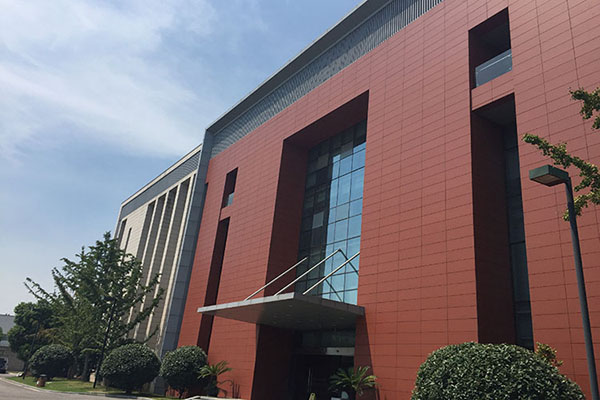
The price of ceramic panel curtain walls is directly related to the order quantity, which is easy to understand. Since ceramic panels were introduced domestically from 2006-2007, they have always been customized products, unlike tiles or marble which have standard inventory. Therefore, each batch of orders is typically produced on-demand by the manufacturer. Switching production for ceramic panels requires cleaning the extrusion equipment again, readjusting the kiln atmosphere, etc., resulting in relatively high costs for each production change. Additionally, if your ceramic panel design requires new molds, the manufacturer will include this cost in the total expenses. If the order quantity is less than 1,000 square meters, the product price is generally around 200 RMB or higher. Typically, only when the order quantity exceeds 10,000 square meters does the quantity no longer have a marginal effect on the price.
The price of ceramic panel curtain walls is affected by the color of the panels. Different colors correspond to different production formulas, and the cost of coloring agents varies. Generally, brick red is the most cost-effective color across manufacturers, followed by yellow. If the ceramic panels are required in all-through colors like black, blue, or green, these unconventional colors usually cost at least 20 RMB more per square meter compared to red.
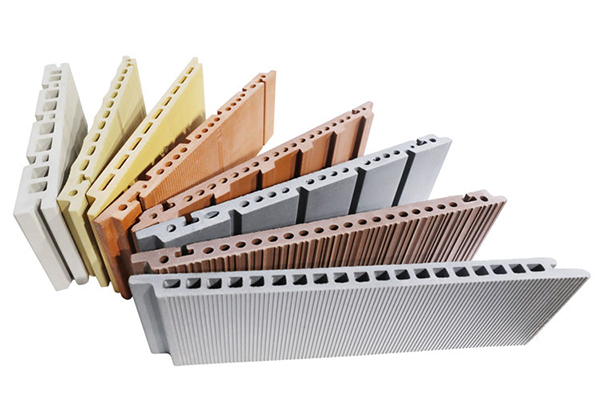
The price of terracotta panel curtain walls is closely related to the size of the terracotta panels. Currently, the pass rate of terracotta panels produced by domestic manufacturers is not as high as that of ceramic tiles or floor tiles. Taking Zhongguang terracotta panel curtain walls as an example, the thicker the panel, the more raw materials are used. The wider and longer the panel, the greater the production difficulty and the lower the overall pass rate. Some might ask, "Are shorter terracotta panels cheaper?" Not necessarily. If the design length is too short, not only does the amount of auxiliary materials for construction increase, but the cutting loss also rises significantly, which can actually increase the cost of waste. Therefore, the standard dimensions for terracotta panels currently range from 600mm to 1200mm in length and 300mm to 600mm in width. If property owners are still concerned about the secondary design of terracotta panel curtain walls being unreasonable, they can consult professional terracotta panel curtain wall manufacturers for customized solutions.
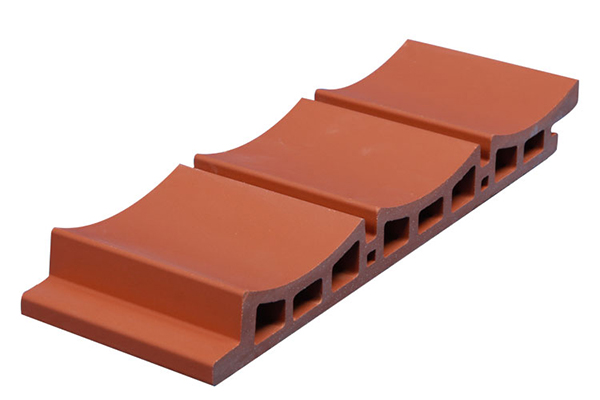
The price of terracotta curtain walls is closely related to the surface design of the terracotta panels. Special surfaces such as grooved panels, brick-textured panels, and similar products not only increase the difficulty of production but also result in secondary wastage during the manufacturing process. These designs are appealing to many domestic manufacturers but are often avoided due to their challenges. Typically, such customized panels cost at least 30 RMB more per square meter than standard terracotta panels. However, the uncontrollable factors during production can easily negate these additional profits.
The above information pertains to terracotta curtain walls, and prices may vary by region. We hope this article proves helpful to you.
(Source:Shaohua Ceramic Panel Manufacturer)
Jiangxi Shaohua Ceramics Co., Ltd. adheres to the principles of environmental protection, ecology, and humanity. The company specializes in the development, research, and innovation of clay-based architectural products, with main products including terra-cotta curtain walls, ceramic bricks, terra-cotta rods, terra-cotta louvers, and other new exterior wall decorative building materials.
 HOME
 PRODUCT
 CASE
 CONTACT